Document processing
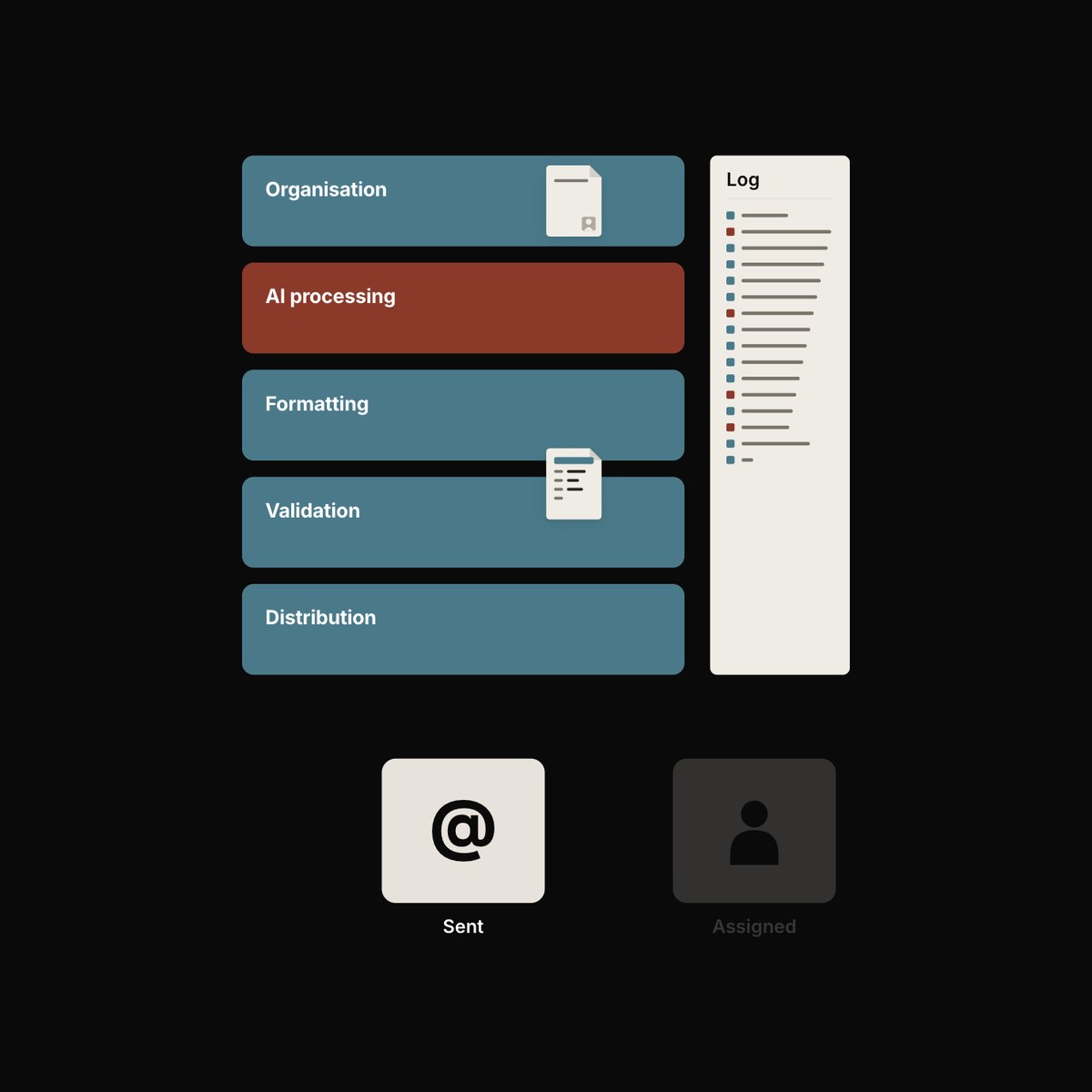
AI document processing can take documents or data in any format and produce consistent, structured output. Engine does it as a fixed five-stage pipeline in which the AI only controls one stage. Everything else is done by our system - formatting, validating, logging and distributing your documents.
The problem: many sources, one required format
Many organisations take in information from a range of sources and have to turn it into a set format for someone else: a regulator, a client, a partner or their own systems. The sources vary in structure and quality, so someone has to read, convert and reformat the information.
Why doing it by hand doesn't scale
Manual processing is limited by people. It is slow, expensive to scale, and the quality of the output depends entirely on who did the work that day.
Manual processing also can't cope with surges in demand. Automations can work around the clock, process multiple documents simultaneously and also don't cost you anything during downtime.

Three ways to process documents
Why a standard AI chat tool isn't the answer
Pasting documents into a general-purpose AI tool is fast and cheap. But the same document can come back differently from one run to the next, there is nothing checking the result, and there is no record of what was done.
You are also not in full control of where your sensitive data ends up. Depending on the plan and its settings, what you paste in may be stored or even used to train the provider's models.
How Engine does it: five fixed stages
At Engine we build layers between you and the AI. Each layer is a fixed process that does the same thing every time, giving you consistent and secure results.
Our systems organise your data inputs and get them ready for processing. Then the AI component securely processes your document according to strict rules.
Everything is then formatted specifically to your templates, and a validation stage checks every output before it leaves the system.
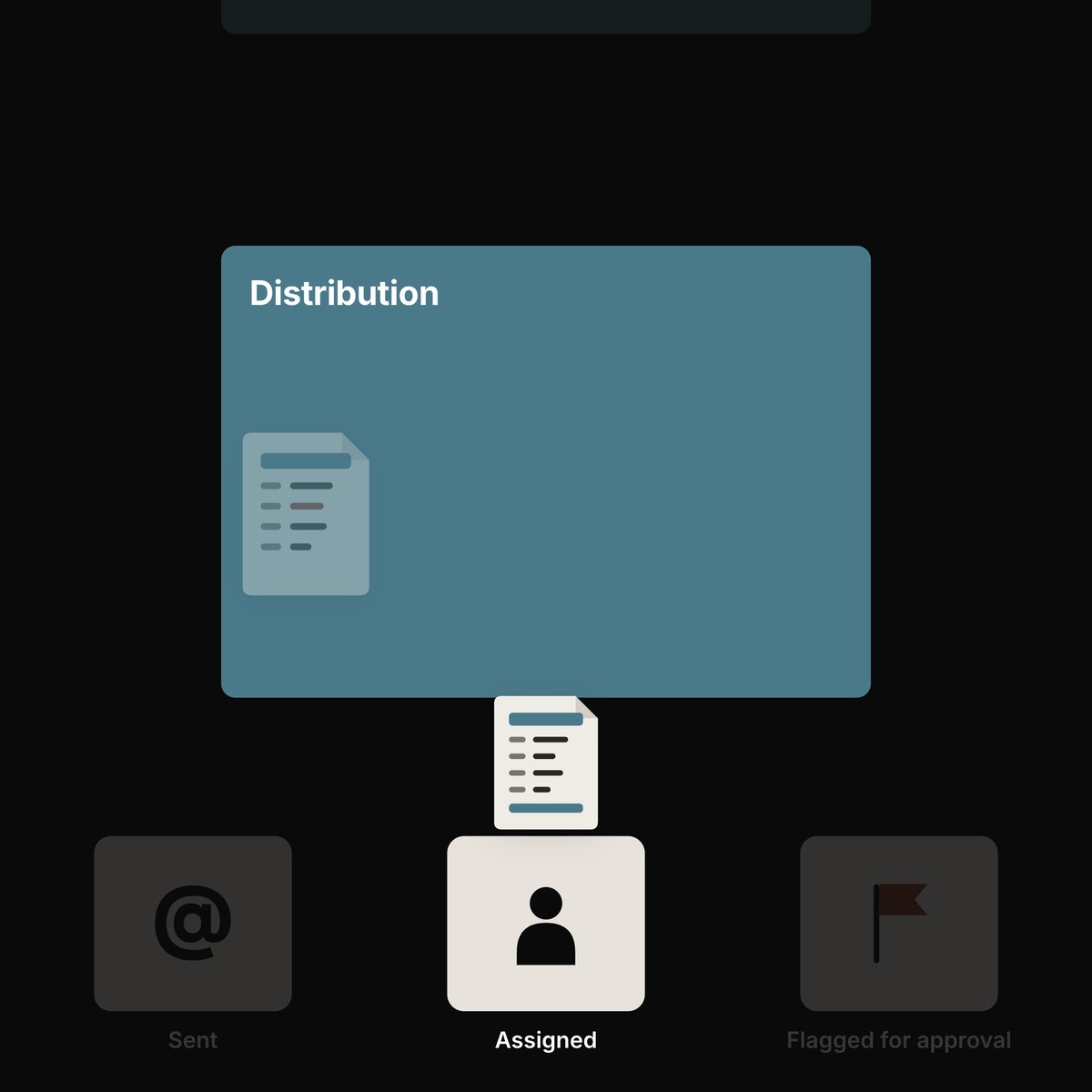
Finally, your documents are distributed according to rules you control. This could mean certain parts of data are extracted and sent to other systems you use, whole documents are sent to the appropriate people, tasks can be assigned to staff members or items can be flagged for approval before anything leaves the building.
Reliable, checked and logged
Because the steps are fixed, the same input always gives the same output. Because every output is validated, errors are caught before they leave. Because every step is logged, you can show exactly what happened to any document.
The AI model is a replaceable part. The same pipeline can run on a frontier model through an API or on a model hosted inside your own infrastructure, and you can change that choice later as policy, performance and cost require. See how APIs and local models compare.